

Why We Put a Diamond on It

People have been tying love to a ring for thousands of years. The diamond is a much newer part of the story.
The ancient Egyptians are usually credited with the first wedding rings. They braided reeds and hemp into circles and wore them on the finger. A circle has no beginning and no end, which made it a symbol of eternity. The empty space in the middle meant something too: a doorway into a life not yet lived.
The Romans kept the tradition and made it practical. A Roman bride often got a ring of iron, a sign of strength and permanence. It also worked as a contract, a public signal that a woman was promised to a man. Later Romans started using gold for the rings women wore in public and kept the iron ones at home.
The Romans also gave us the belief that the fourth finger of the left hand holds a vein that runs straight to the heart. They called it the vena amoris, the vein of love. Anatomy doesn't back it up, but the idea stuck, and most of the Western world still wears its wedding ring on that finger.
Through the Middle Ages, rings got fancier. Some were engraved with short love poems called posies, written on the inside of the band where only the wearer could read them. Wealthy families set rubies, sapphires and emeralds into their rings. Diamonds were rare, hard to cut, and mostly owned by royalty.
The famous first came in 1477. Archduke Maximilian of Austria proposed to Mary of Burgundy with a ring set with thin, flat diamonds arranged in the shape of an M. The European nobility took notice, and the diamond engagement ring became a status symbol for the very rich.
For the rest of the world, nothing changed for centuries. Then, in the 1870s, miners found enormous diamond deposits in South Africa. Suddenly there were more diamonds than anyone knew what to do with, and a flood of them could have made the stones cheap. In 1888 Cecil Rhodes founded De Beers, which took control of most of the world's diamond supply and kept prices high by controlling how many stones reached the market.
The Great Depression nearly wiped out the diamond market. In 1938 De Beers hired the New York advertising agency N.W. Ayer to make Americans want diamonds again. The agency did not sell a stone. It sold an idea: real love means a diamond, a bigger diamond means bigger love, and a diamond should never be resold, because you don't sell a promise. They put diamonds on movie stars, wrote stories about celebrity engagements, and sent lecturers into high schools to talk to young women about engagement rings.
In 1947 a copywriter named Frances Gerety wrote the line that sealed it: "A Diamond Is Forever." Later campaigns told men a ring should cost two months' salary. Within a few decades, the diamond went from a luxury for a few to something nearly every bride expected.
So why a diamond? Part of it is real. It is the hardest natural material on earth, it handles everyday wear, and the way it throws light is beautiful. A stone that almost nothing can scratch makes a good symbol for a love that is supposed to last.
The rest is one of the most successful marketing campaigns in history. The ring is ancient. The diamond is mostly an advertisement that worked.
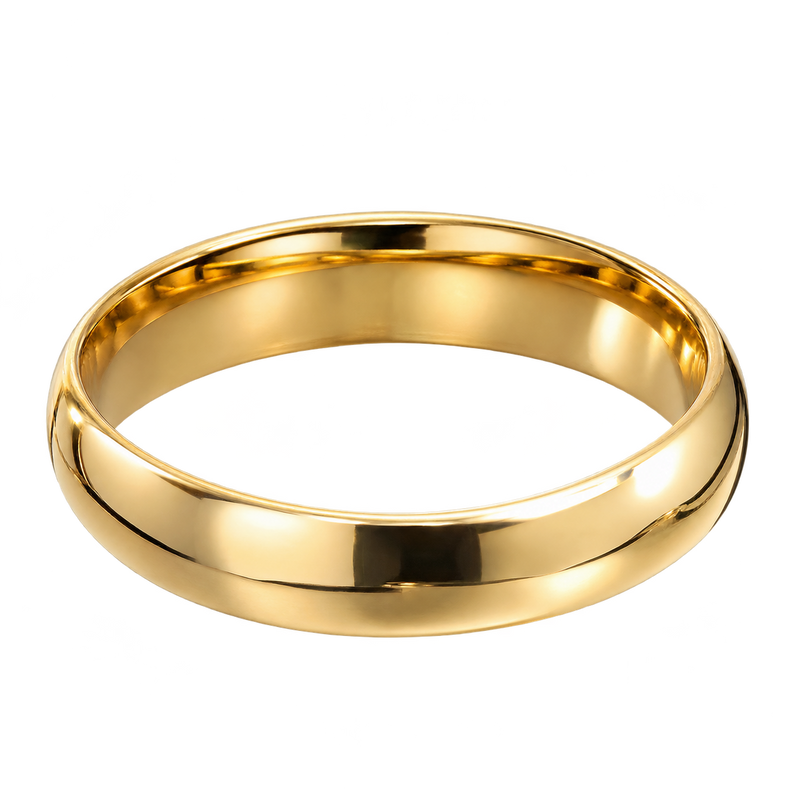
None of that makes the gesture less real. A reed, a band of iron, a gold circle or a diamond, the ring has always meant the same thing: I choose you, and I'm not going anywhere.

tap into our thousands of self-help blogs,
talk back