

I remember this moment like it was yesterday. I had gone to my soon-to-be partner Mr. X.’s hedge fund office to give a presentation to about 30 or 40 investors. We were raising our Series A, our first significant round of outside capital, and we had organized a small evening cocktail party around the presentation. We invited prospective investors, gave them some entertainment, told the story of the company, explained what we were building, and eventually made the ask.
I was standing on what felt like the financial center stage of my life. When I finished speaking, Mr. X. was the first person to raise his hand, and his question was direct: “How do you feel about plastic versus glass?”
I did not hesitate. I told him that glass was too difficult to manage, too expensive and complicated to scale, and inconvenient for customers. I made it clear that I was committed to plastic. It was exactly the answer he wanted to hear, and at the time I believed it too. I thought that answering differently might make me sound like an impractical founder who did not understand the realities of building a large retail business.
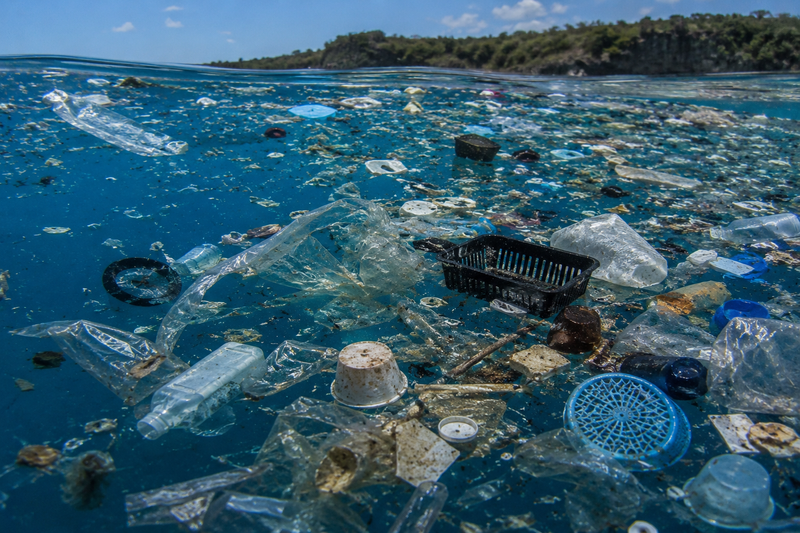
That answer helped determine the direction we would follow for the next seven or eight years. As the company grew, we became buried in plastic: plastic bottles, plastic cups, plastic lids, plastic forks, plastic spoons, plastic bags and plastic straws. We were the plastic people, and for a long time we were completely unapologetic about it because plastic was cheap, light, convenient and easy to scale.
Several years later, as sales began to recede, Mr. X. and I both understood that something in consumer behavior was changing. Some of our most influential customers, including celebrities and highly health-conscious consumers who often helped shape broader trends, were becoming uncomfortable with the enormous amount of plastic involved in buying our products. A person could walk out after purchasing a juice, a smoothie, a salad and a few prepared foods carrying an astonishing amount of disposable packaging, all in the name of health.
We were stuck inside a philosophy that we probably could have found our way out of, but we had never created the kind of culture between us that encouraged enough questioning of our original assumptions. Unfortunately, Mr. X. and I had also become adversarial. He continued putting substantial amounts of money into the business and exercised enormous control over what happened, while very few people felt comfortable speaking truth to power. I was one of the people who did, along with a handful of others, and disagreement could come with consequences.
At the same time, plastic was not the only challenge facing the business. Another major shift in consumer psychology was underway: people had become terrified of carbohydrates. The keto era was arriving, and suddenly fruit itself had an image problem.
There is an interesting irony in the health-food business. In some ways, it is easier to convert customers who are eating junk food, fried food and heavily processed food because many of them already feel terrible. When they begin eating more fruits, vegetables and minimally processed foods, they may feel a dramatic difference, and that experience can turn them into loyal customers. The challenge becomes much greater when people have been convinced that some of the very foods you are selling, particularly fruit and carbohydrate-rich whole plants, are themselves the enemy.
By the time I left the company in 2019, I had become increasingly aware of another contradiction that I could no longer ignore: we were selling products associated with health while surrounding nearly everything in disposable plastic. After I left, I came up with a sentence that summarized the contradiction for me: It is ironic to serve the healthiest product in the unhealthiest package.
When I began developing the idea for goodsugar, I saw two major problems that I wanted the new company to confront from the beginning. The first was the growing fear of sugar, and the second was our industry’s dependence on plastic.
Customers already had relationships with established juice bars, wellness businesses and health-food brands, so I needed a way to interrupt those loyalties and start a different conversation. I decided to go directly at what I considered one of the biggest misconceptions in modern nutrition: the idea that all sugar should be treated as though it were the same substance consumed in the same context.
The name goodsugar became the argument itself. There is naturally occurring sugar contained within whole fruits and carbohydrate-rich plants, accompanied by fiber, water and a complex food matrix, and then there are refined and added sugars consumed in entirely different forms and quantities. Treating a piece of fruit and a highly refined sugary product as nutritionally interchangeable never made sense to me. The name goodsugar was my offensive move against the growing idea that people should be frightened of fruit.
The plastic problem was different because there was no philosophical argument required. I simply had to stop using it wherever we reasonably could.
I knew immediately that the products would look substantially better in glass, so I decided to start with Mason jars. I found a supplier in Brooklyn, bought jars and lids, and began building the packaging system from there. I believed that if we eventually purchased enough volume, we could negotiate better pricing and bring the cost of glass down to something economically workable, which is essentially what happened.
I had two major fears. The first was that customers would reject glass because it was heavier and potentially less convenient. I never fully believed that would happen, but the concern was real. My second fear was breakage. I imagined jars smashing constantly in stores, delivery bags, refrigerators and customers’ homes, creating an operational nightmare. That problem never materialized anywhere near the scale I imagined. Today, I would estimate that we break roughly one Mason jar a week.
When Peter Kay, the former COO of Juice Press, became involved with goodsugar, he suggested creating a Mason jar lid with a hole designed for a smoothie straw. It was an obvious idea once he said it, so we made it happen. That small modification helped turn a traditional storage jar into practical beverage packaging without abandoning the glass format.
Then another piece came together. I realized that our point-of-sale system could credit customers directly when they returned qualifying jars, which led us to offer 50 cents in store credit for each one returned. At that point, glass stopped being merely a packaging decision and became part of the loyalty system itself. Customers accumulated jars, brought them back, received credit in their accounts and returned to the store to use that credit. Something that initially seemed like an operational obstacle became another reason for the customer to maintain a relationship with us.
Looking back, these were ideas we had been too caught up in our own assumptions at Juice Press to fully explore. Once a large chain has been built around one packaging system, changing that system becomes enormously complicated. Supply chains, storage, transportation, weight, breakage, washing, returns, costs, refrigeration, delivery and store operations all have to be reconsidered. What sounds simple from the outside can become monumental when multiplied across a large organization.
goodsugar had one tremendous advantage: we could start differently.
As a small, single-unit business, we did not have to dismantle an existing system before building a better one. We simply built glass into the operating model from the beginning and eliminated single-use plastic from our food and beverage packaging wherever we could. To my knowledge, we moved further and earlier in that direction than the larger juice chains and many of the health-food retailers I had spent years competing with.
That accomplishment is personally significant to me because I had once been part of the problem. My previous company distributed an enormous amount of single-use plastic into the world, and for years I barely questioned it because it was simply considered the practical way to operate. I participated in that system, defended it and helped scale it.
Then I changed my mind.
I think there is something important in admitting that without trying to rewrite history to make ourselves look better. We do not have to pretend that we were always enlightened, always correct or somehow standing on the right side of every issue before everyone else figured it out. Sometimes we are part of the problem. Sometimes we defend the problem because it is convenient, profitable or simply the way things have always been done. Progress begins when we become willing to notice that, reconsider what we once believed, and build differently when we get another opportunity.
I sincerely believe that goodsugar introduced something meaningful to our small corner of the food industry. It is not a spectacular invention, and I may never receive much recognition for it, but I know what happened. We demonstrated that a modern food business could make glass attractive, practical, portable and financially workable while integrating the return of the packaging into the customer experience itself.
The products look substantially better in glass. They feel more valuable, the colors and textures of the food are visible, and the packaging feels intentional rather than disposable. We found a way to make glass portable and relatively easy for customers without making the economics absurd. The return credit creates loyalty and conversation, while the packaging itself becomes something customers often reuse or bring back rather than immediately throwing away. There is also another reason I prefer glass: reducing direct contact between food and plastic reduces a potential source of exposure to chemicals that can migrate from certain plastic materials into food and beverages.
Most importantly, we turned something I once considered impractical into something completely ordinary. Every day, customers walk into goodsugar, buy food and drinks packaged in glass, carry them through New York City, bring the jars home, return them when they are finished, receive credit and repeat the process. What once seemed like an impossible operational burden simply became the way we do business.
Sometimes progress looks exactly like that. We defend the old way because we cannot yet imagine another one, then experience forces us to question what we believed, and eventually we are given an opportunity to build the alternative.
The interesting part is not that I was right.
The interesting part is that I was wrong, recognized it, and changed.


talk back