

The Gurus: Who Should We Trust to Teach Us?

Why do you suppose that when YouTube and social media became popular, so many new self-help teachers appeared?
Were all these people sitting quietly at home waiting for someone to invent the right platform? Or does the medium itself bring something out in us? What kind of person looks into a camera and says, Hey, world, I figured something out. Let me teach you how to live.
There is nothing inherently wrong with that impulse. Teaching is one of the reasons human civilization exists.
Human beings inherit knowledge. We do not begin again with every generation. We learned how to harness fire, work with metal, build shelter, find food, identify poisonous plants, discover medicinal ones, preserve seeds, grow crops, and harvest them. Someone learned something and showed somebody else. That person improved it and passed it forward.
We are not born knowing most of these things. We are taught.
Passing useful knowledge from one human being to another is therefore one of the most valuable things we do.
But there is an enormous difference between teaching someone how to build a fire and telling someone that you understand the human mind.

The More Complicated the Subject, the More Humility We Need
The mind is an extraordinarily complicated thing, and we should be suspicious of anyone, including ourselves, who becomes too certain about understanding it.
It is natural when we learn something to feel that we finally understand how it works. Then ten years pass. We learn more, have more experiences, meet different people, encounter better evidence, and discover that some of what we were absolutely certain about was incomplete or simply wrong.
Imagine having another hundred years to study the same subject. How many times would you revise what you believe? How many ideas would you refine? How many would you throw away completely?
That possibility should produce humility in anyone who teaches.
A good teacher should be able to say, This is what I understand today. This is what has worked for me. This is what the evidence appears to show. I may understand it differently someday.
Certainty is seductive, particularly when certainty is being performed for an audience.
The Principle I Keep Coming Back To
For me, one principle survives all of these revisions: non-harm and compassion.
Our understanding of psychology will change. Our theories about consciousness will change. Medical knowledge changes. Spiritual interpretations change. Cultures change.
But if your new philosophy suddenly requires you to become cruel, to dehumanize people, to celebrate suffering, or to deliberately harm innocent living things, something has gone seriously wrong.
That is one of the simplest tests I know.
The most important place to apply it is in how we relate to everything around us: other people, animals, plants, communities, and the planet itself.
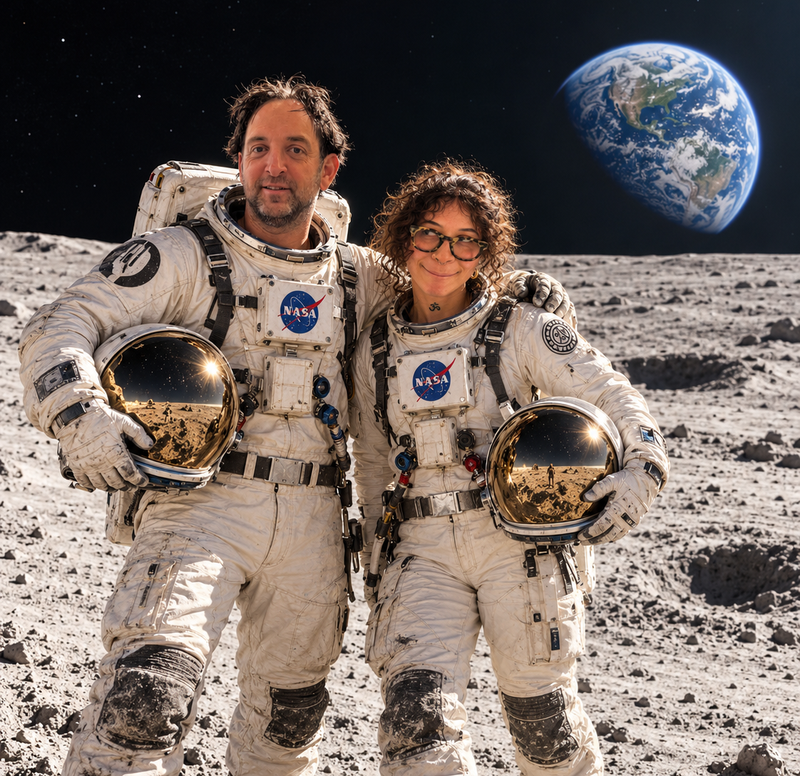
Human beings have become extraordinarily capable of altering our environment. We have even carried our garbage beyond Earth. Thousands of defunct satellites, rocket bodies, fragments, and other pieces of human-made debris now orbit the planet.
We figured out how to litter in space.
Given enough technological power without enough wisdom, who knows how far we could extend that habit?
But the opposite possibility exists too.
We could become better at listening.
What Makes a Good Teacher?
Imagine what could happen over generations if we became better at recognizing good teachers.
Not simply charismatic teachers. Not teachers with millions of followers. Not the person with the best lighting, the most dramatic thumbnails, the most expensive retreat, the largest podcast, or the greatest certainty.
Good teachers.
A good teacher should be less interested in making you dependent on them and more interested in helping you become capable of thinking without them.
They should not need to be worshipped.
They should not need to win every argument.
They should be able to distinguish between what they know, what they believe, what they have experienced, and what they are merely wondering about.
Most importantly, their behavior should resemble their teaching.
If somebody teaches compassion but humiliates everyone around them, pay attention. If they teach freedom but demand obedience, pay attention. If they teach detachment while appearing obsessed with money, status, admiration, and power, pay attention.
The teacher is part of the lesson.
Ideas Travel Without Magic
I like the idea of collective consciousness, but we do not even need to make a supernatural claim to understand how powerful the transmission of an idea can be.
Someone realizes something.
They tell another person.
Maybe they write it on a cave wall. Maybe they put it in a book. Maybe they teach it to somebody who desperately needs to hear it at precisely the right moment. Today they might put it on the internet.
The idea moves.
Another person modifies it, tests it, improves it, challenges it, or carries it somewhere its originator never imagined. Eventually the original teacher may disappear completely while some piece of what they understood continues moving through humanity.
That is the extraordinary benefit of teaching.
You may never know where the good you put into the world eventually lands.
Buyer Beware
But there have always been quacks.
There have always been people who know very little and speak with enormous confidence. There have always been conspiracy theorists, narcissists, opportunists, fame seekers, power seekers, and people who discover that human vulnerability can be converted into money.
The internet did not invent them.
It gave them distribution.
And that changes the responsibility on both sides.
The student has to learn how to evaluate the teacher, and the teacher has to examine why they want to teach.
Am I trying to help?
Am I trying to understand?
Am I sharing something that genuinely improved my life?
Or do I need people to tell me that I am wise?
Do I want to teach people, or do I want followers?
Do I want the idea to succeed, or do I need everyone to know that the idea came from me?
Those are uncomfortable questions, which is exactly why anyone who wants to teach should ask them.
Before you become a guru, become a student.
Concentrate. Study. Practice what you are teaching. Change your mind when better information arrives. Be suspicious of your own certainty. Make sure the person you are becoming resembles the philosophy you are selling.
Then, if you have something useful, teach it.
But learn this lesson well before you blanket the Earth with your information.



tap into our thousands of self-help blogs,
talk back