Extract Tincture Bar (Full Menu)

Smoothie Booster Bar, Organic Ingredients - Spirit Alcohol Based*
(Add any high potency extract as a booster to your smoothie when ordering page)
Extracts
American Ginseng — Vitality
Ashwagandha — Calm
Asian Ginseng — Endurance
Black Elderberry — Defense
Dandelion — Detox
Digestive RX (Blend of Fennel, Ginger, Dandelion)
— Digestion
Dragon's Blood — Repair
Echinacea — Shield
Fennel Seed — Digest
Ginger — Fire
Ginkgo Biloba — Focus
Genius RX (Blend of Kava & Ginko)
— Digestion
Gotu Kola — Clarity
Intensial Soother — Ease
Immunity RX (Blend of American Ginseng, Echinacea, Elderberry) Immunity
Kava — Peace
Lemon Extract — Bright
Maca — Drive
Sea Moss Extract — Mineral
Reishi — Immunity
Moringa Liquid — Nourish
Multi Function Shilajit Formula — Restore
365 Mushroom Blend — Adapt
Flatbelly — Balance
Elderberry — Protect
Holy Basil — Uplift
Propolis — Heal
Milk Thistle — Cleanse
Cayenne Fire — Ignite
Skull Cap — Quiet
Uva Ursa — Flush
Powders
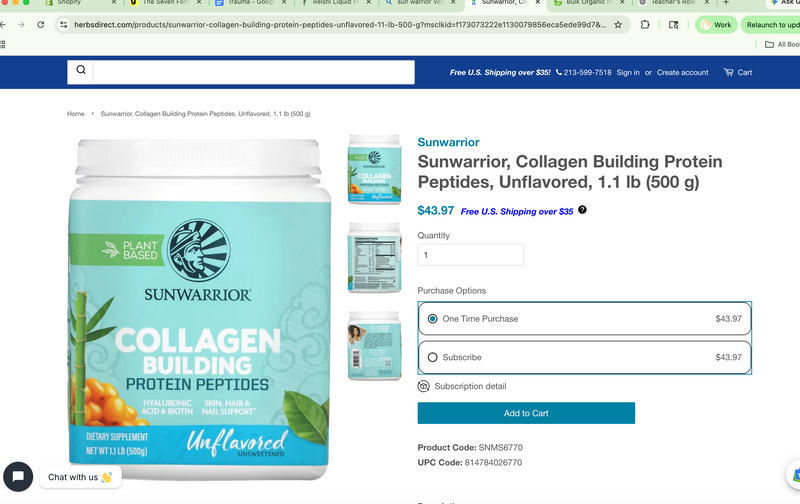
Sun Warrior Vegan Collagen Peptides - Muscle Growth
Truvani Vegan Creatine
Other
Nutiva MCT Oil
Herbal Goodness Guayusa Leaf Extract
(Ask our in-store wellness guides for recommendations.)
*The solvent you use to extract an herb determines which of its compounds you pull out, and how concentrated and stable the final product is.
Knowledge
Alcohol-based extracts (tinctures)
Alcohol is a more aggressive solvent. It pulls out a broader spectrum of compounds including resins, alkaloids, essential oils, and many phytochemicals that water simply cannot dissolve. The result is a more potent, more complete extraction. Alcohol also acts as a preservative, giving tinctures a shelf life of several years without degradation. Because the compounds are held in suspension in alcohol, they absorb quickly through the mucous membranes when taken sublingually. The standard ratio is typically 1:5 (one part herb to five parts liquid), though high-potency tinctures can be 1:1 or 1:2.
Water-based extracts (teas, decoctions, infusions)
Water pulls out water-soluble compounds: polysaccharides, some flavonoids, tannins, and certain minerals. It cannot reach the fat-soluble or resin-based constituents. The result is a gentler, narrower extraction. Shelf life is very short, days at most without refrigeration, and potency degrades quickly. That said, for certain herbs, water extraction is actually preferred because the therapeutic compounds are water-soluble and the resins or alkaloids you'd get from alcohol would be unnecessary or even irritating.
The practical difference
For most medicinal herbs, alcohol extracts are significantly more potent gram for gram. A well-made tincture of echinacea or ashwagandha will deliver more of the active constituents than an equivalent tea. However, for herbs like marshmallow root, slippery elm, or certain mushrooms where the healing compounds are polysaccharides, water extraction is equally or more appropriate.
Glycerin-based extracts sit in between. They are alcohol-free, mildly sweet, and capture some but not all of what alcohol would. They are less potent than tinctures but longer-lasting than water extracts, and are commonly used for children or people avoiding alcohol.
**Bee
Propolis is a resinous substance bees collect from tree buds and bark, then mix with their own enzymes and beeswax to seal and protect the hive. Because it is produced by bees and harvested from their colony, it falls into the same category as honey, royal jelly, and beeswax, all of which most vegans exclude.
The philosophical argument against it is consistent with the core vegan principle: bees produce propolis for their own survival and the health of their colony, not for human use. Harvesting it disrupts the hive and takes something the bees made for themselves.
Where it gets complicated
Some people who otherwise eat vegan make an exception for bee products, particularly propolis and honey, because bees are insects and the neurological capacity for suffering in insects is genuinely debated. The argument is that the ethical concern driving veganism, minimizing harm to sentient creatures, may not apply with the same force to an insect as it does to a mammal or bird.
Others point out that commercial beekeeping involves practices that harm bees at scale regardless of the sentience debate, so they exclude it anyway.
The bottom line
Technically and by definition, no, propolis is not vegan. Practically, some plant-based eaters use it as a personal exception, particularly for its impressive antimicrobial and immune-supporting properties, which have no perfect plant-based equivalent. Whether that exception is acceptable is a personal line each person draws for themselves.
**Honey
Honey begins as a flower. That is not a metaphor. The source material is nectar, drawn from blossoms, which means its origin is entirely botanical. Bees collect it, add their own enzymes, and fan it with their wings until the water evaporates and it becomes the dense, golden substance we know. The transformation is enzymatic. No animal tissue is involved. No secretion in the biological sense that milk or eggs represent. What you are eating, when you eat raw honey, is a plant compound that has been alchemized by one of nature's most intelligent creatures into something more concentrated, more medicinal, and more alive than it was at the source.
This distinction matters, and serious food philosophers have made it. The argument that honey is not a plant-based food has always been somewhat thin when examined closely. The nectar is plant cell based. The process is enzymatic. The result is botanical in origin even if the mechanism is biological.
The ethical objection that has more weight is how bees are treated. There was a period in commercial beekeeping, and it still happens in some operations today, where queen bees had their wings clipped to prevent them from leaving the hive and taking the colony with them.
That is a legitimate grievance, and the early plant-based movement was right to raise it. But the picture is more complex than the critique suggests. Responsible beekeepers have every economic and practical reason to protect their colonies. A stressed hive produces nothing. A dead queen is a catastrophe. The relationship between a skilled beekeeper and their bees is closer to stewardship than exploitation, and at scale, bees are not victims of agriculture so much as its architects.
They pollinate approximately one third of the global food supply. Without them, the plant-based movement itself collapses. Almonds, berries, cucumbers, squash, most of what fills a produce section exists because bees worked it into existence. The line between using bees and benefiting from bees is not a line at all. It is a circle.
Veganism, like most ethical frameworks, was built over time and contains internal contradictions that its most rigid adherents tend not to examine. A person eating a strictly vegan diet who avoids honey on principle while consuming crops that required commercial pollination is making a distinction that does not fully hold up under scrutiny. I am not saying the ethics do not matter. I am saying the ethics are more nuanced than a label allows.
My mentor in food, Fred B., has been one hundred percent raw for sixty-five years. He uses raw honey. He has used it his entire life, as part of a dietary philosophy that is more rigorous, more studied, and more empirically validated than almost anything I have encountered in decades of working in this space. That is a data point worth taking seriously. At the time of this writing Fred is 97.
Raw honey is enzymatically alive. It is antimicrobial, antifungal, rich in antioxidants and trace minerals, and has been used medicinally across virtually every culture on earth for thousands of years. There is no refined or processed substitute that replicates what it does. Manuka honey has documented wound-healing properties that modern medicine has not been able to synthesize. Propolis, the resinous compound bees produce to seal and protect their hives, is one of the most potent natural antimicrobials known. These are not folk remedies. They are substances with serious biochemical profiles.
Honey is not part of my daily diet, not because I believe it is wrong, but simply because it is not something I reach for. If I feel the need, I will use it. I do not carry guilt about that. The goal of a plant-based life is not moral perfection measured against an arbitrary checklist. It is a genuine effort to eat in a way that honors the body, respects living systems, and causes the least unnecessary harm. Raw honey, sourced from ethical beekeepers, does not violate any of those principles in any meaningful way.
The enemy of good health is not a teaspoon of raw honey. It is the processed, refined, industrially manufactured food supply that passes itself off as nourishment while quietly dismantling human health over decades. Keep your focus there.